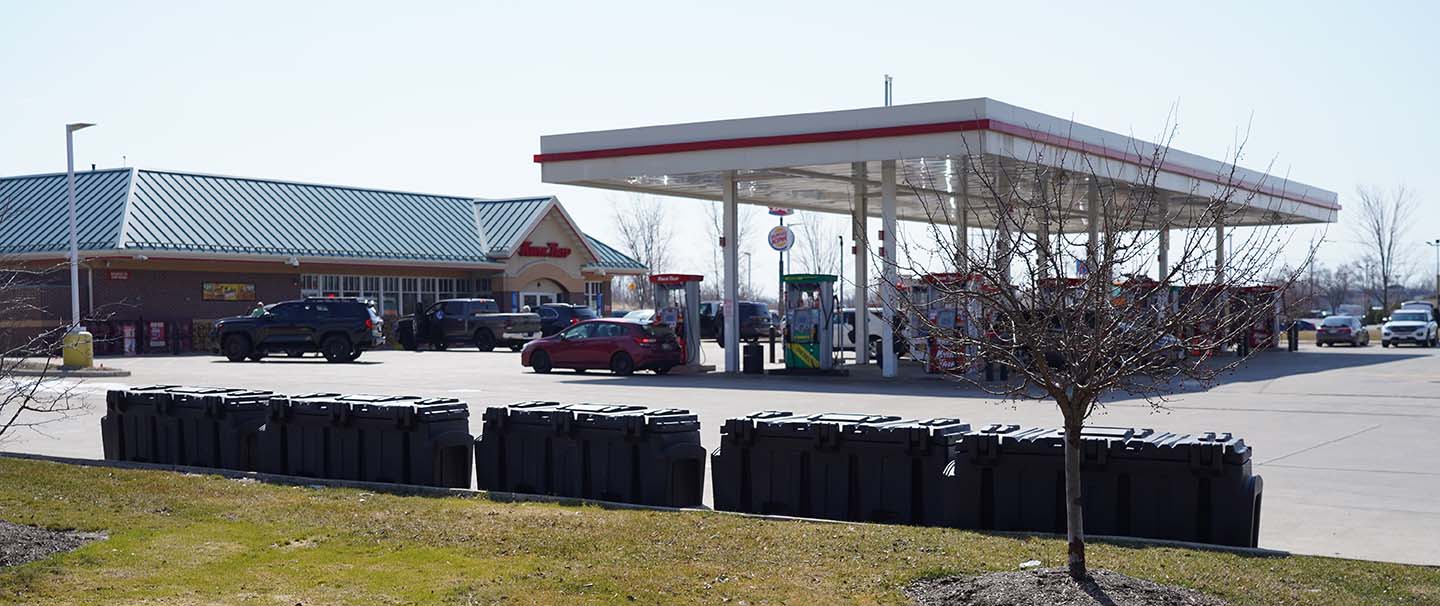
SiteTote helps campuses, healthcare systems, municipalities, airports, and corporate properties modernize winter operations by moving from truck-heavy, catch-up logistics to an on-site salt system. The result is more controlled, consistent application, better inventory management, and fewer vehicle trips—outcomes that can strengthen sustainability reporting and support LEED-aligned goals around environmental impact, water quality protection, carbon/emissions reduction, and site safety.
LEED Operations & Maintenance (O+M)
While SiteTote doesn't directly earn LEED points, it can support the operational practices that LEED O+M programs reward.
Sustainable Sites (SS)
LEED Goal: Reduce environmental impact from site operations.
SiteTote Contribution:
- Less salt overapplication through controlled dispensing.
- Reduced chloride migration into adjacent landscapes and waterways.
- More consistent application rates across crews and properties.
- Reduced site disturbance from large salt delivery trucks during storms.
Documentation Opportunity:
- Salt usage per acre.
- Salt usage per storm event.
- Year-over-year chloride reduction metrics.
Transportation & Emissions Reduction
LEED Goal: Reduce operational carbon footprint.
SiteTote Contribution:
- Fewer truck trips during snow events.
- Elimination of repeated loading runs.
- Reduced idle time.
- Reduced fuel consumption.
Metrics to Track:
- Truck miles eliminated.
- Gallons of fuel saved.
- CO₂ emissions avoided.
These metrics are powerful for sustainability reports.
Innovation Credits
Some facilities pursue custom innovation initiatives.
Potential SiteTote-Supported Programs:
- Chloride reduction initiative.
- Sustainable winter maintenance program.
- Winter operations environmental stewardship plan.
A university or hospital could potentially use documented reductions in salt usage and emissions as part of an innovation strategy.
ESG Mapping
Environmental (E)
Water Quality Protection
Problem:
Chlorides are increasingly regulated because they contaminate lakes, rivers, groundwater, and drinking water sources.
SiteTote Benefit:
- Better inventory control.
- Less panic application.
- More accurate dispensing.
- Potential reduction in total chloride use.
ESG Reporting Metric:
"Reduced annual salt consumption by X%."
Carbon Reduction
Problem:
Snow operations generate significant vehicle emissions.
SiteTote Benefit:
- Fewer emergency supply runs.
- Reduced loader usage.
- Reduced truck travel.
ESG Reporting Metric:
"Reduced winter operations emissions by X tons CO₂ annually."
Resource Efficiency
Problem:
Salt is often wasted due to poor storage and handling.
SiteTote Benefit:
- Protected storage.
- Reduced spillage.
- Better inventory management.
ESG Reporting Metric:
"Reduced material waste and improved resource efficiency."
Social (S)
Campus & Patient Safety
For:
- Universities
- Hospitals
- Senior living communities
SiteTote supports:
- Faster response times.
- Consistent site treatment.
- Reduced slip-and-fall exposure.
Reporting Language:
"Improved winter safety response capabilities."
Governance (G)
Auditability
Organizations increasingly need proof of environmental stewardship.
SiteTote creates opportunities to document:
- Salt deliveries.
- Salt consumption.
- Inventory levels.
- Site-specific usage.
This supports:
- Environmental audits.
- Risk management.
- Sustainability reporting.
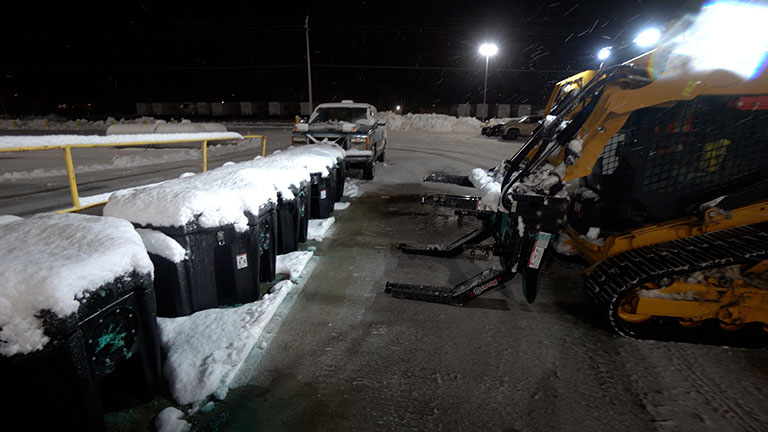
Municipal Sustainability Programs
Many municipalities now have:
- Chloride reduction initiatives.
- Watershed protection programs.
- Stormwater permits.
- Salt-smart certification programs.
SiteTote aligns exceptionally well with these efforts because it enables:
- Reduced application rates.
- Better inventory accountability.
- Reduced emergency hauling.
- Better operational planning.